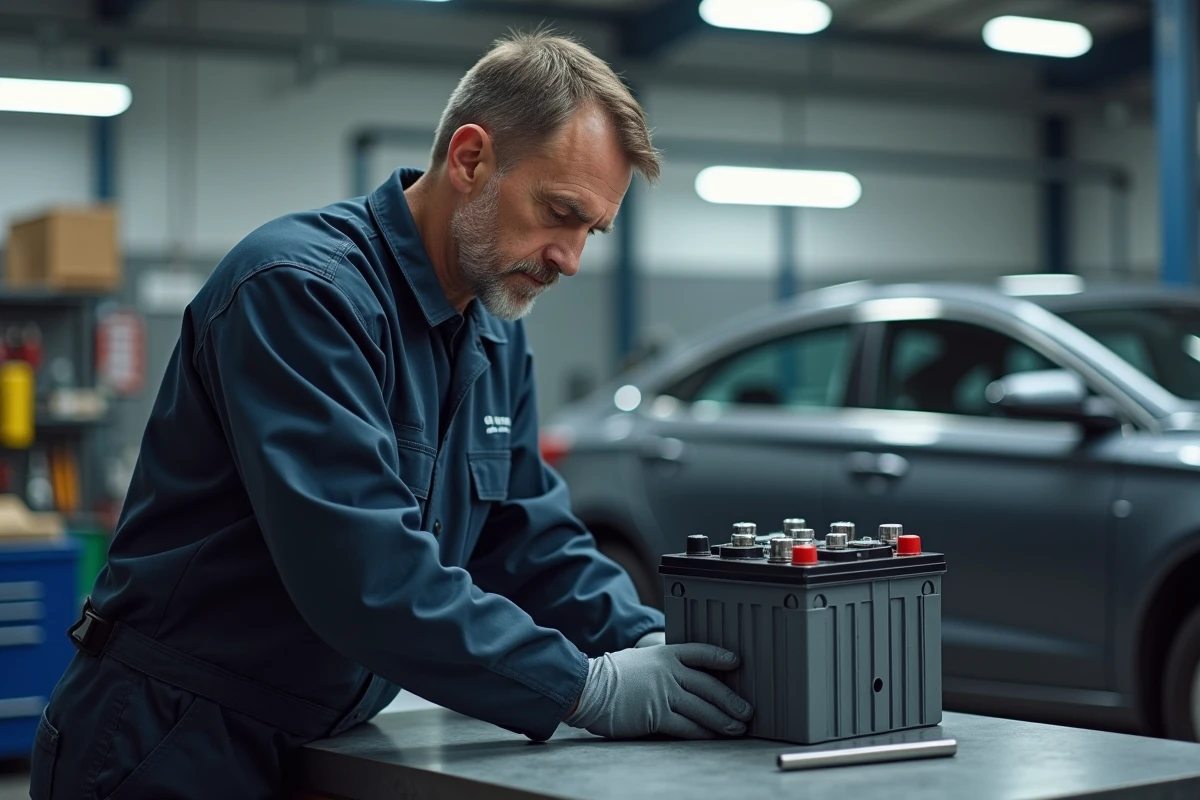
A hybrid battery showing signs of fatigue raises a direct question: should it be completely replaced, partially repaired, or should the vehicle be sold? The cost of replacing a hybrid battery varies greatly depending on the model, the type of provider, and the actual condition of the pack. Field reports show significant price discrepancies, even for the same car model, complicating any quick estimate.
Module-by-module diagnosis: the step that most quotes overlook
Before discussing prices, a technical point deserves attention. A hybrid battery is not a monolithic block. It consists of several modules (or cells) assembled in series, and their aging is not uniform.
Some specialized garages, like Hybride Center, offer a module-by-module diagnosis that allows for the identification of faulty cells without condemning the entire pack. This approach changes the decision-making logic: instead of a complete replacement, a targeted repair on the worn modules may suffice.
The cost difference between the two options is often substantial. To learn everything about replacing a hybrid battery, it is essential to first understand this distinction between total exchange and partial intervention, as it radically alters the budget to be planned.
An advanced diagnosis generally includes measuring the voltage of each module, assessing internal resistance, and conducting a capacity test under load. Without this data, accepting a quote for a complete replacement is akin to replacing an entire engine for a clogged injector.
Cost of replacing a Toyota hybrid battery: why quotes vary so much
Owners of Toyota Prius or Yaris hybrids are the most affected by this issue, as these models have dominated the French hybrid fleet for over fifteen years. The batteries are aging, and quotes are starting to come in.
A documented testimony on a Facebook group mentions a Toyota Yaris hybrid whose battery was replaced for around 3,299 euros the first time. The owner then received a second, higher quote for the same battery, on the same vehicle. This case illustrates a market reality: prices fluctuate depending on the provider, the availability of packs, and the timing of the request.
Several factors explain this volatility:
- The price of a new battery depends on the manufacturer and the generation of the vehicle. Packs for newer models cost more than those from earlier generations.
- Labor costs vary between an official dealer and a specialized independent garage. Some workshops charge for removal and reinstallation in a few hours, while others take a full day.
- The availability of refurbished batteries creates a parallel market with prices sometimes half that of new ones, but with variable warranties.
For a hybrid vehicle over ten years old, the cost of a complete replacement can represent a significant portion of the vehicle’s residual value. This is precisely where the option for partial repair makes economic sense.
Targeted repair or complete replacement: concrete selection criteria
Targeted repair involves replacing only the faulty modules within the pack. It requires precise diagnosis and access to compatible cells, whether new or refurbished.
When partial repair is sufficient
If the diagnosis reveals that one or two modules out of the ten in the pack exhibit abnormally low voltage, selective replacement is relevant. The savings compared to total replacement are significant, according to feedback from specialists like Hybride Center.
This option is particularly suitable for vehicles where the rest of the mechanics are sound. Investing in a partial battery repair on a vehicle that has other issues (transmission, suspension, braking) does not make financial sense.
When complete replacement is necessary
When the majority of the modules show signs of advanced degradation, targeted repair only delays the problem. The remaining cells, even if still functional, are likely to fail in the following months.
Complete replacement also offers the advantage of a longer warranty and uniformity across the entire pack. A new or fully refurbished pack ensures uniform aging of the cells, which extends the overall lifespan.

Signs of wear and actual lifespan of a hybrid battery
The average lifespan of a hybrid battery is between 8 and 10 years, or approximately 160,000 to 200,000 kilometers according to available data. These figures vary depending on climate, driving style, and frequency of regenerative braking use.
Several signals should alert a hybrid vehicle owner:
- A noticeable decrease in displayed electric consumption, with the internal combustion engine taking over more often than before.
- A battery warning light or a fault code related to the hybrid system appearing on the dashboard.
- Abnormal voltage variations visible through a diagnostic tool like Hybrid Assistant, used by many Prius owners to monitor their battery’s condition.
- A loss of acceleration in electric mode, especially at low speeds in the city.
The climate plays an underestimated role. Heat and cold cycles accelerate the degradation of nickel-metal hydride (NiMH) cells still present in many non-rechargeable hybrids. Plug-in hybrids, which often use lithium-ion cells, exhibit a different aging profile.
Regular maintenance of the battery ventilation system (filter, air ducts) helps maintain a stable temperature and slow down wear. This simple action, rarely mentioned in maintenance logs, can extend the replacement deadline by several years.
The market for replacing and repairing hybrid batteries is gradually structuring itself, with specialized players offering alternatives to going through dealerships. For an owner faced with a quote, the most reliable approach remains to request a detailed diagnosis before validating any intervention and to compare at least two quotes from different providers. The vehicle’s residual value should remain the final decision-making criterion.