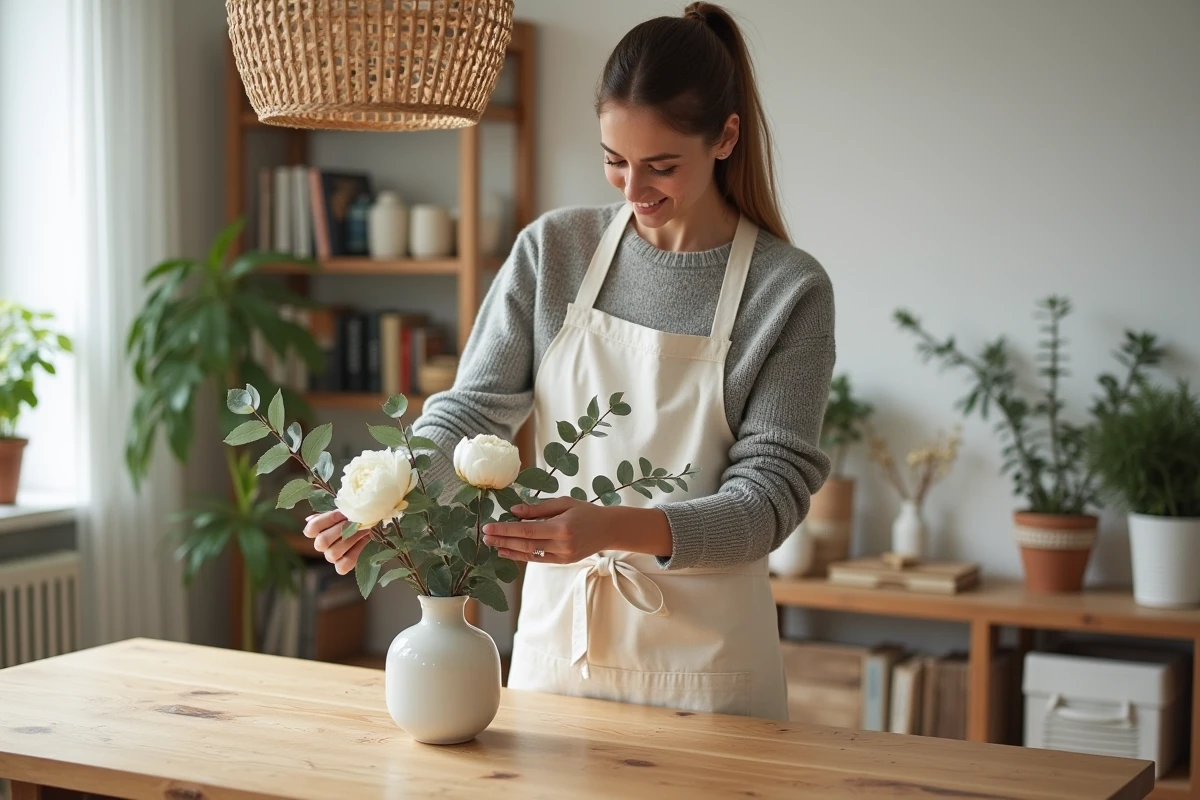
Beautifying your home doesn’t always involve buying a new object or an additional piece of furniture. Recent decor content is leaning towards a lighter approach: reversible interventions, crafted light, rotation of what you already own. This logic deserves to be pushed further than the usual tips lists by examining what truly changes the perception of an interior on a daily basis.
Natural and artificial light: the most underestimated lever for beautifying your home
Light alters the perception of volumes, colors, and materials much more than any decorative accessory. Moving a piece of furniture that partially blocks a window, or replacing an opaque curtain with a linen sheer, can sometimes transform the atmosphere of an entire room.
On the artificial lighting side, multiplying light sources at different heights (table lamp, wall sconce, low garland) creates distinct ambiance zones within the same space. A single central ceiling light flattens the room and diminishes its contours. Three light sources at different levels change more than a new sofa.
Several recent publications on interior design confirm this trend: the focus is now on creating a daily feeling, not just a fixed style. This approach can be found in the home section of Buzzorama, which documents these ambiance-centered approaches rather than accumulation.
A simple and free gesture: cleaning windows and lampshades once a month. Dust on a fabric lampshade can significantly reduce light diffusion. This type of visual maintenance produces an immediate effect that most decor guides do not mention.
Rotation and rearrangement: beautifying your interior without buying anything
Habit dulls the eye. A frame hung in the same spot for two years eventually fades from attention. The rotation of decorative elements, a practice borrowed from art galleries and museums, involves regularly moving what you already own from one room to another.
A vase from the living room migrates to the entryway. A painting from the bedroom moves above the desk. Simply changing an object’s context renews the perception of it. This principle also applies to textiles: a throw, cushions, a table runner can circulate between rooms according to the seasons.
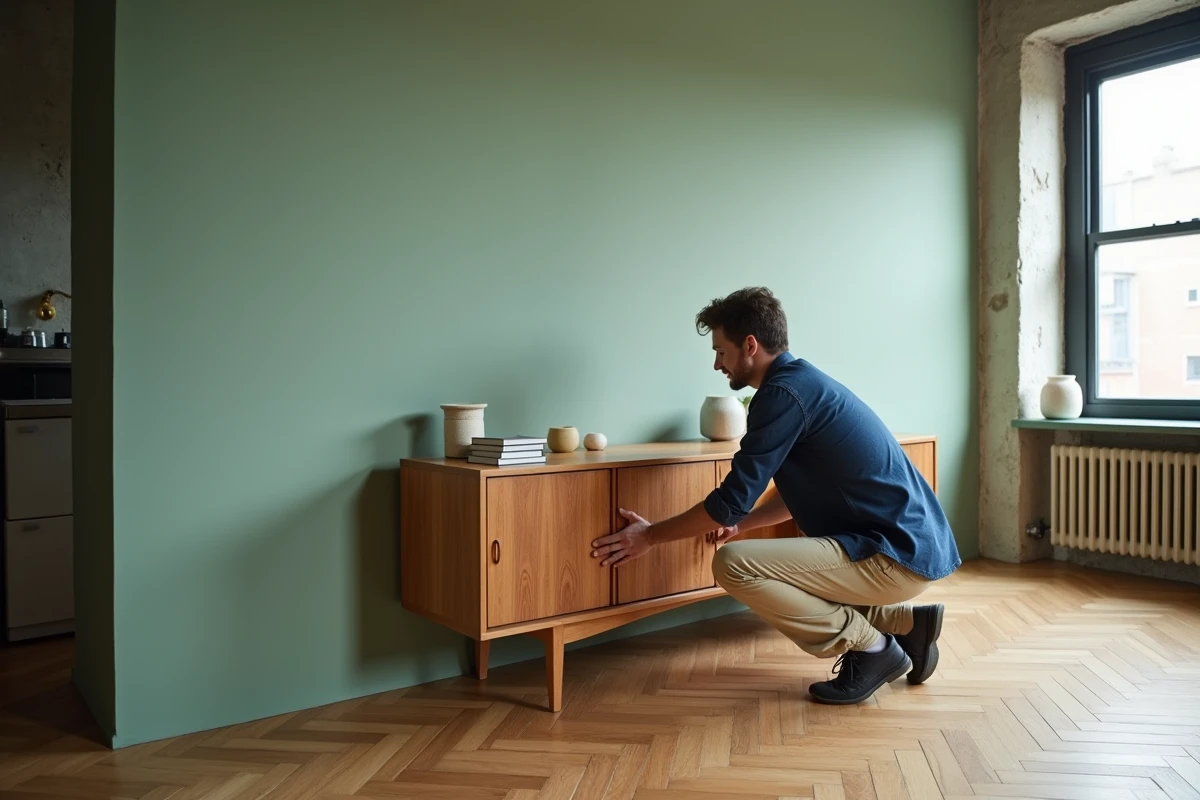
Rearranging existing furniture
Moving a sofa a few dozen centimeters, pivoting a table to clear a passage, orienting an armchair towards the window instead of the screen: these micro-adjustments change the flow within the room and, by extension, how we inhabit it.
The idea is not to overhaul everything at once. The most recent home advice content emphasizes a logic of step-by-step progression, room by room, testing one change before adding another. This method avoids decision fatigue and allows for measuring the real impact of each modification.
Visual maintenance: daily gestures that transform the ambiance of a room
Decluttering is a well-worn topic. What is less discussed is the notion of visual maintenance, which encompasses all the gestures that maintain the aesthetic coherence of a space without adding or removing objects.
Some concrete actions fall into this category:
- Folding and aligning visible textiles (throws, towels, cushions) to create clean lines, even in a relaxed interior.
- Grouping small objects by material or color on a tray or shelf, instead of scattering them across multiple surfaces.
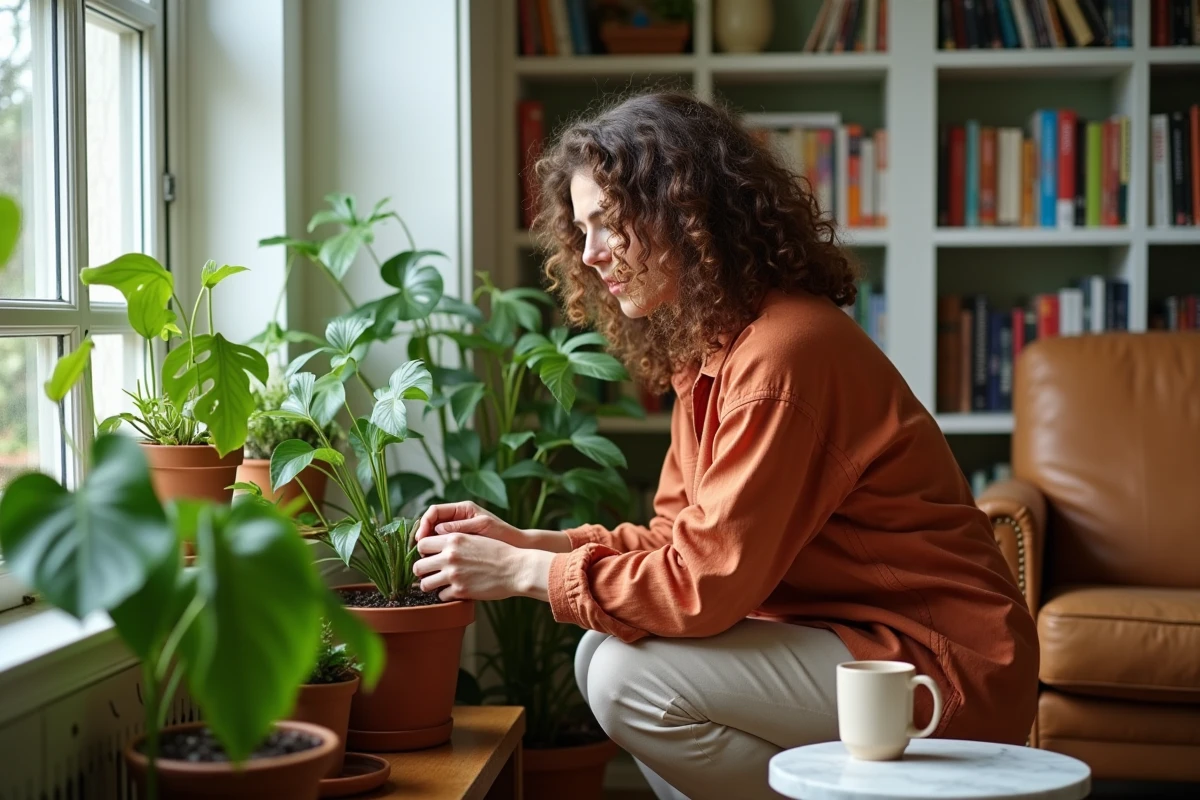
- Wiping the leaves of green plants, which collect dust and lose their shine in a few weeks.
- Storing cables and chargers in a dedicated container, as technological clutter disrupts visual coherence faster than traditional clutter.
A well-kept interior relies more on the alignment and cleanliness of surfaces than on the choice of objects themselves. This is a finding that field feedback regularly confirms: after a thorough cleaning, the room appears “refreshed” even though nothing has changed.
Colors and materials: working on coherence without repainting
Repainting a wall remains one of the most effective and least expensive transformations. Recent decor content values soft, natural, or colorful atmospheres, centered on feeling rather than a labeled style.
However, painting is not always possible (rental, budget, time). In this case, textiles become the main vehicle for chromatic coherence. A set of cushion covers in two complementary tones, new bed linens, a rug that picks up a color already present on a shelf: coherence is built through echoes of colors, not uniformity.
Materials and textures rather than patterns
Mixing textures (wrinkled linen, raw ceramic, light wood, matte metal) adds depth to a monochrome interior without introducing an additional pattern. This approach works particularly well in small spaces, where too many different patterns create rapid visual saturation.
A useful test: photograph the room with a phone. The two-dimensional image reveals color imbalances and overly loaded areas that the accustomed eye no longer perceives. The photo acts as a free and immediate decor diagnostic tool.
Transforming your interior on a daily basis relies less on what you buy and more on how you use what you have. Light, placement, visual maintenance, and rotation of decorative elements are concrete levers that do not depend on a budget or a trend. The first gesture can be as simple as moving a lamp tonight.