
Within Muslim communities, Ashura is a day imbued with spirituality and traditions. This religious celebration, which occurs on the tenth day of Muharram, the first month of the Islamic calendar, encompasses multiple facets. For Shiites, it is primarily marked by mourning in commemoration of the martyrdom of Imam Hussein in Karbala. For Sunnis, it takes on a dimension more focused on fasting and expressing gratitude to God for the blessings received. Practices vary significantly from family to family, reflecting the cultural diversity of Islam and personal interpretations of religious teachings.
Meaning and Origins of Ashura in Muslim Tradition
The Islamic Ashura is a commemoration with multiple dimensions. Within the sacred month of Muharram, the tenth day of this first month of the Muslim year, Ashura stands as a beacon of memory and spirituality. For Shiites, it represents the fateful day when Imam Hussein, son of Imam Ali and grandson of the Prophet Mohammed, was killed in 680 during the battle of Karbala, in present-day Iraq. This day, marked by tragedy, has crystallized in Shiite history as a symbol of the struggle against oppression and injustice, embodied by the Umayyad caliph Yazid.
The narrative of the battle of Karbala is interwoven with heroic and tragic figures, such as Zaynab and Abbas, respectively the sister and half-brother of Hussein, as well as his son Zayn Al-Abidine, one of the few survivors of this massacre. On the other side, the Umayyad dynasty, represented by Yazid, son of Mouawiya, embodies tyranny and the drift from the values espoused by original Islam. The resistance of Hussein and his companions, although in the minority and parched by the blockade of the Euphrates, remains etched in collective memory as a standard of courage and faith.
Ashura is not solely a day of mourning for Shiites. It is also observed by Sunnis, for whom it holds a different significance. This day is considered the one on which the Prophet Moses was saved from the waters of the Nile or, according to other traditions, from the yoke of Pharaoh. The Prophet Mohammed is said to have instituted the fast of Ashura as a sign of gratitude for these events. Among Sunnis, Ashura is often associated with fasting, echoing Moses’ fast, and with the expression of gratitude to God for His blessings.
In this perspective, Ashura is a prism through which the diverse traditions and stories that compose Islam are reflected. It is both a moment of reflection and meditation on the human condition, and a call to embrace the values of justice and resilience in the face of adversity. The legacy of Hussein, the memory of Moses, and the example of the Prophet Mohammed converge on this significant date, marking each year a moment of reflection and spiritual renewal for believers.
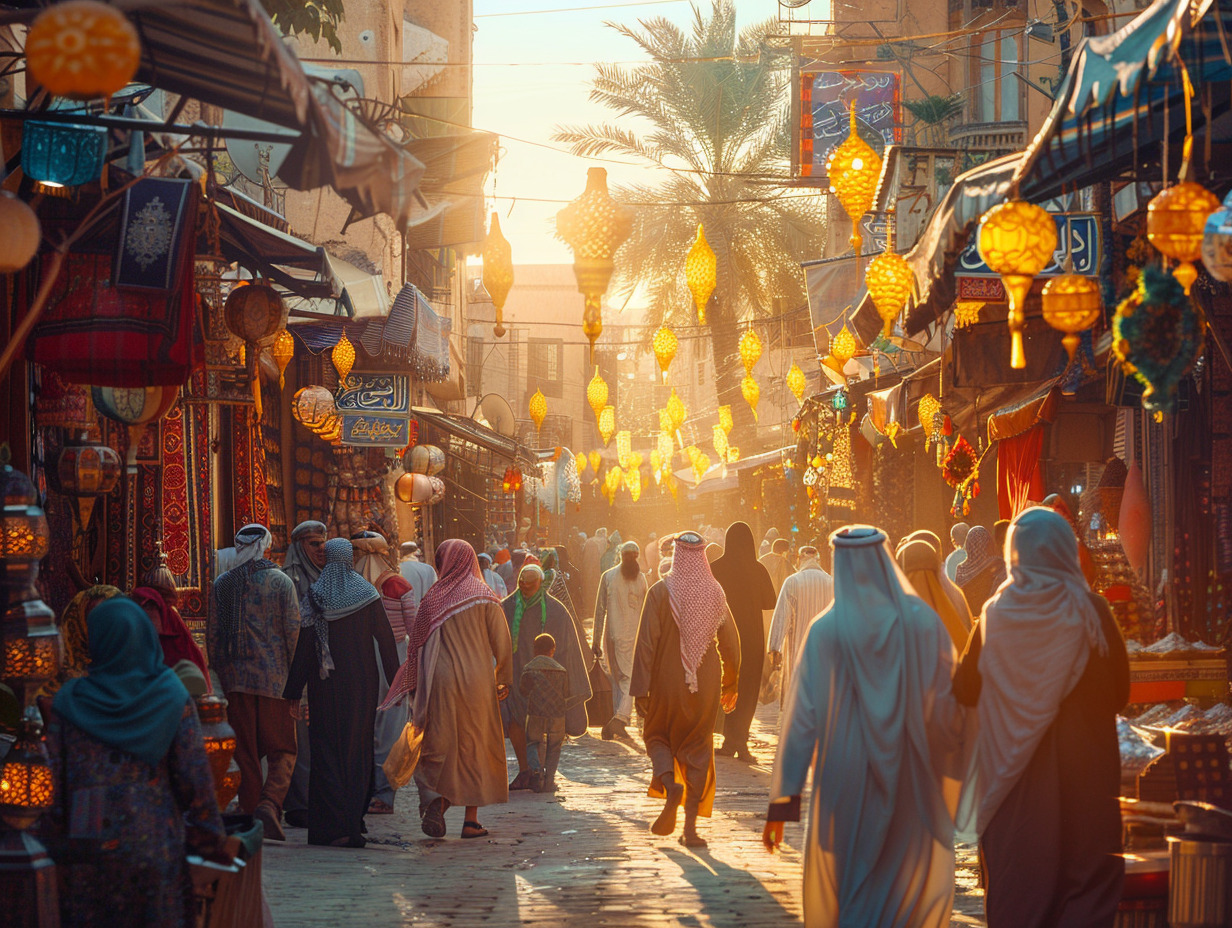
Contemporary Practices and Diversity of Family Celebrations
In Iran, the beating heart of Shiism, Ashura is experienced with particular intensity. From Tehran to Kerman, passing through the cities of Kuhbanân, Yazd, or the village of Afzâd, families gather for grand processions. The cries and lamentations accompany the recitations of the tragedy of Karbala, often delivered by esteemed reciters such as Bassem Al-Karbalai. Theatrical pieces, known as ta’ziyeh, dramatize the events of 680 with a fervor that transcends the centuries. The rituals, both public and private, testify to a belonging to a common history, a resistance against forgetfulness.
In the Sunni world, the approach to Ashura differs but remains laden with meaning. In Morocco, for example, the day is often marked by the preparation of specific dishes, such as celebration soup or couscous. Here, the emphasis is on conviviality and sharing, with a strong social significance. Children receive toys and gifts, symbolizing joy and generosity. Fasting, practiced by some, is part of a quest for purification and spiritual renewal, recalling the fasts of Prophet Moses and Mohammed.
Shiite intellectuals such as Ali Shariati or Morteza Motahhari, as well as religious leaders like Ayatollah Rouhollah Khomeiny or Moussa Sadr, have contributed to shaping a modern vision of Ashura, emphasizing its ethical and social dimensions. In this contemporary reinterpretation, Ashura becomes a moment of reflection on issues of justice, equality, and engagement in society. Their influence endures in current practices, particularly among younger generations.
Hezbollah in Lebanon, a political party with a marked Shiite identity, also mobilizes Ashura in its discourse. The party, which derives part of its legitimacy from the symbol of resistance embodied by Imam Hussein, organizes ceremonies that serve as expressions of solidarity and identity affirmation. The mourning ritual, the memory of martyrdom, and the call for unity blend into events that transcend the simple religious framework to touch on the political sphere.
Ashura, in its diversity, manifests through practices that reflect the plurality of interpretations and contexts. Each family, according to its heritage and understanding of Islam, perpetuates or reinvents its traditions to give meaning to this day of commemoration.