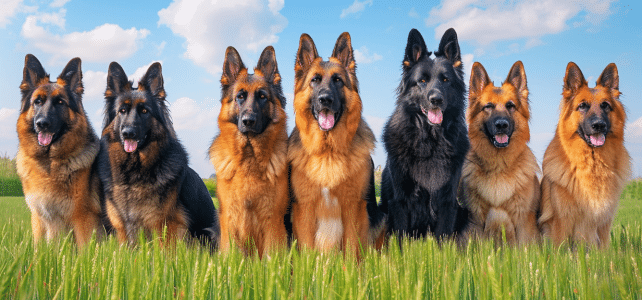
The German Shepherd, an iconic breed known for its versatility and intelligence, showcases a color palette that is as varied as it is surprising. Often associated with its black and tan coat, this dog breed actually presents a wide range of shades that not only influence its appearance but can also have repercussions on its health and perception by enthusiasts. From solid coats to deep black, through shades of gray, sable, and even blue or white, each color variant carries a part of genetic heritage and breed standards.
The Shades of Genetics: Exploring the Colors of the German Shepherd
The world of German Shepherds is rich in colors, but each chromatic variation is the result of a complex dance between genes. The classic black and tan coat is the most recognized, with well-defined markings that contrast with the darkness of the base coat. Shades like black and cream or black and red are merely variations in the intensity and distribution of pigments.
Among the colors, special mention must be made of the blue German Shepherd, a specimen whose hue results from a dilution of the traditional black. Although this color is rare and often the subject of debate regarding its acceptance in breed standards, it reflects the genetic diversity of German Shepherds. Colors referred to as dilution, such as blue and liver, open a field for in-depth comparison between the different color variants.
The sable German Shepherd and the gray demonstrate another facet of genetic variability. These shades, sometimes close to silver, are the result of genes that influence the distribution of dark pigments on the coat. These coats can vary from one individual to another, offering a mosaic of patterns that makes each dog unique.
Bicolored German Shepherds and those displaying a white coat are the result of specific genetic heritage. The Swiss White Shepherd, often confused with the white German Shepherd, illustrates this divergence where the coat color leads to a distinction of breed. The rare phenotype of the panda German Shepherd, with its unique spots, adds to the diversity and raises questions about the purity of the lineage and the standards established by dog clubs.
Impact of Color Variations on the Health and Behavior of the German Shepherd
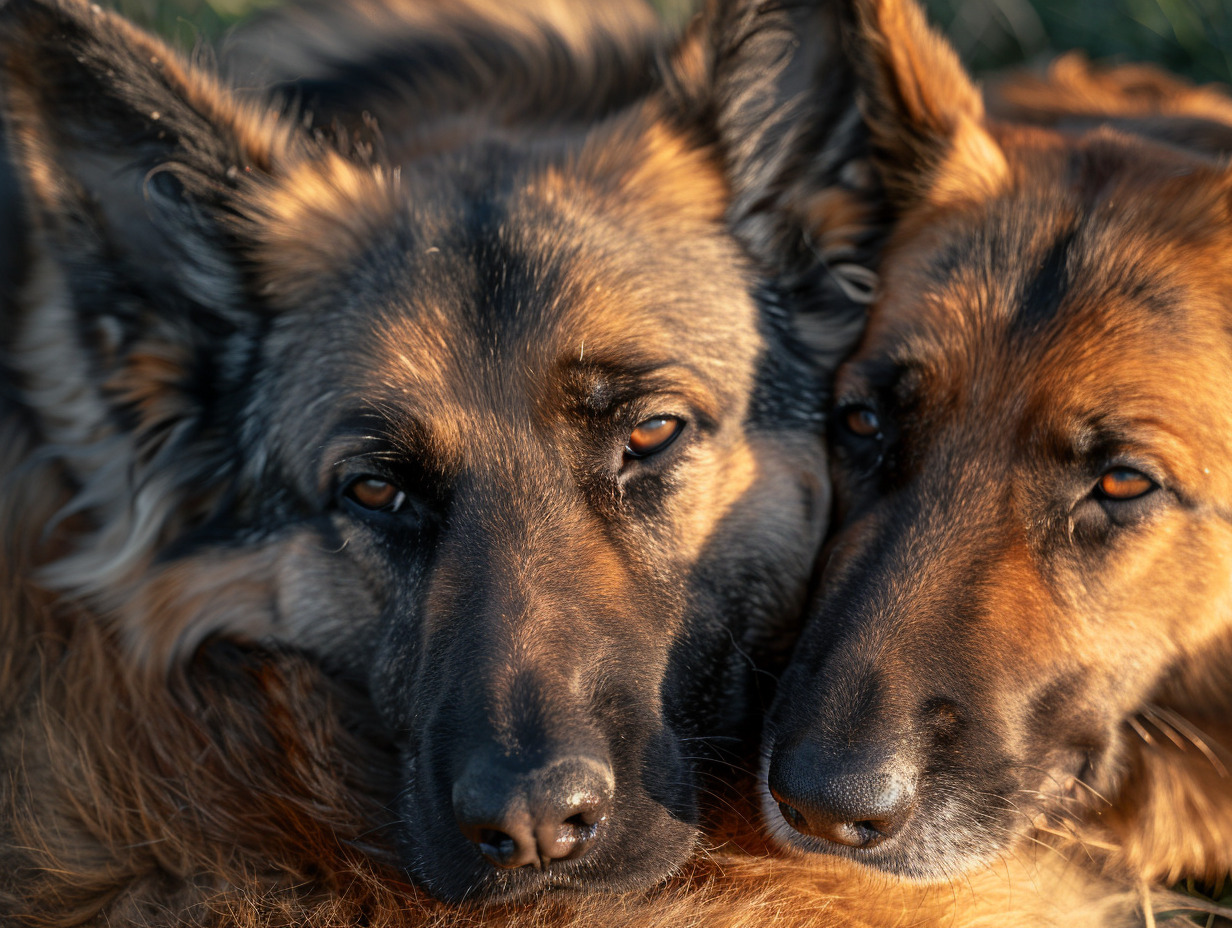
German Shepherds, regardless of their coat, are renowned for their loyalty and intelligence. These protective and lively dogs are constantly alert, making them particularly suited for guardian roles. Can the color of their coat influence their health and behavior? A question that deserves careful examination.
At the behavioral level, color does not seem to determine specific traits. A black German Shepherd will be just as affectionate and good with children as a sable or white counterpart. The intrinsic qualities of the breed, such as liveliness, alertness, and the ability to get along well with other animals, transcend color variations. It is the individual temperament, shaped by upbringing and environment, that will shape these aspects.
Regarding health, the breed’s characteristic double coat, present in all color variants, requires attentive grooming. Regular brushing is essential to maintain the health of their coat, and a monthly bath can help preserve the cleanliness and shine of the fur. However, issues such as hip dysplasia are common across all types of German Shepherds and are not influenced by coat color. While it is true that the medium to large size and weight are characteristics shared by all German Shepherds, it would be erroneous to link these physical attributes to coat color. Working lines, particularly those from West Germany, are selected for their ability to perform specific tasks rather than for their color. Whether the dog sports a black and tan coat or a blue coat, its work abilities remain a primary selection criterion for breeders.