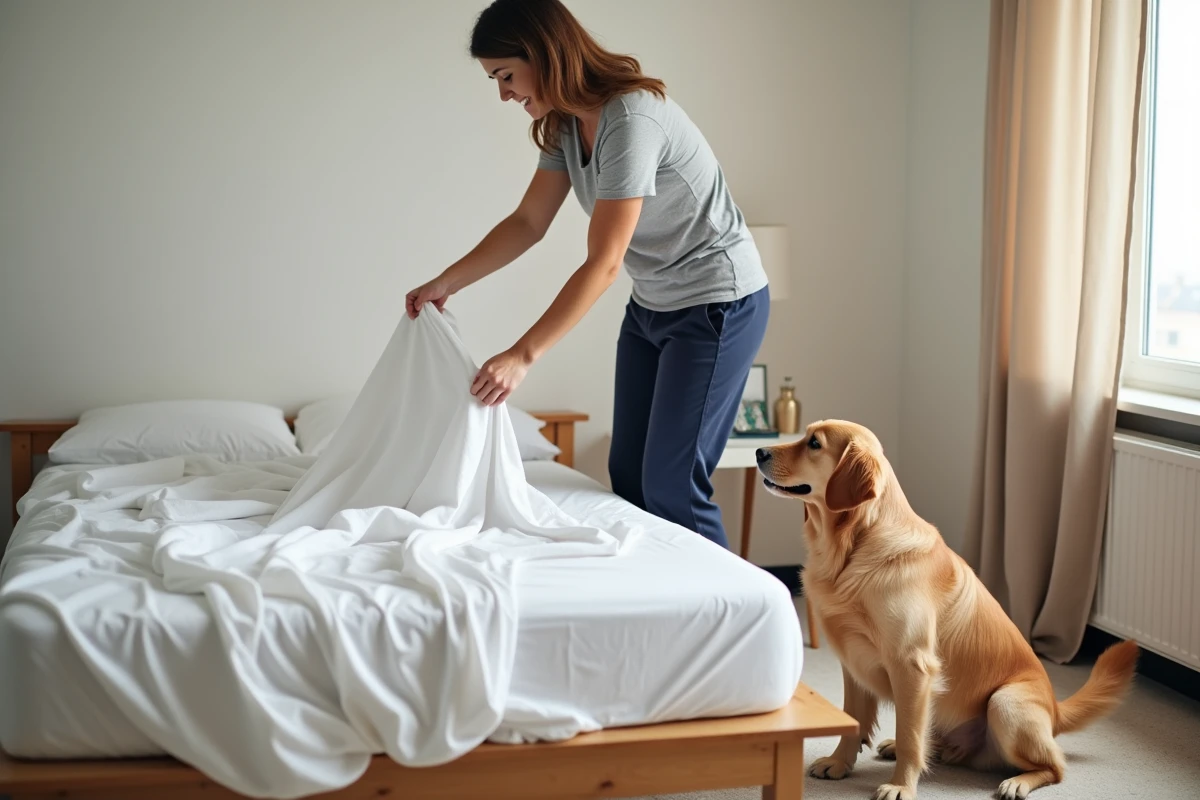
The dewormer acts on the adult parasites present in the animal’s digestive tract, but it does not destroy the eggs already dispersed in the environment. Changing the sheets after deworming your pet is therefore as much about managing household parasites as it is about caring for the dog or cat itself.
First dose or second dose: the real schedule for changing the sheets
Most antiparasitic protocols involve two doses spaced fourteen days apart. The first eliminates adult worms. The second targets the larvae that have hatched in the meantime, coming from the eggs already laid before the treatment.
We recommend a first sheet change in the hours following the administration of the first dose. The animal may expel dead or dying worms in its feces, but can also contaminate textiles through direct contact if it sleeps on the bed.
The second change occurs after the second dose, following the same logic. Waiting until the end of the complete protocol to wash only once means sleeping for two weeks on potentially contaminated linens with residual eggs. To delve deeper into this schedule, we invite you to change the sheets after deworming on Animalya where the topic is discussed in detail.
Classic veterinary dewormer or broad-spectrum antiparasitic treatment
A dewormer prescribed by the veterinarian generally targets a specific type of parasite (nematodes, cestodes). The dosage schedule directly influences the timing of the bedding change. A single-dose treatment for tapeworms requires only one sheet renewal, while a two-dose protocol for roundworms necessitates two.
In the case of mixed infestation, the veterinarian may combine several molecules. The cleaning schedule then aligns with the last dose administered.
Survival of parasite eggs in bedding
Pinworm eggs can survive up to three weeks in the home. This duration far exceeds the interval between two doses of dewormer. A sheet left in place during this time becomes a reservoir for reinfestation, for both the animal and the humans in the household.
The eggs are not visible to the naked eye. Their presence on a fabric cannot be detected by smell or touch. Only a rigorous washing protocol can eliminate them.
Washing temperature and drying
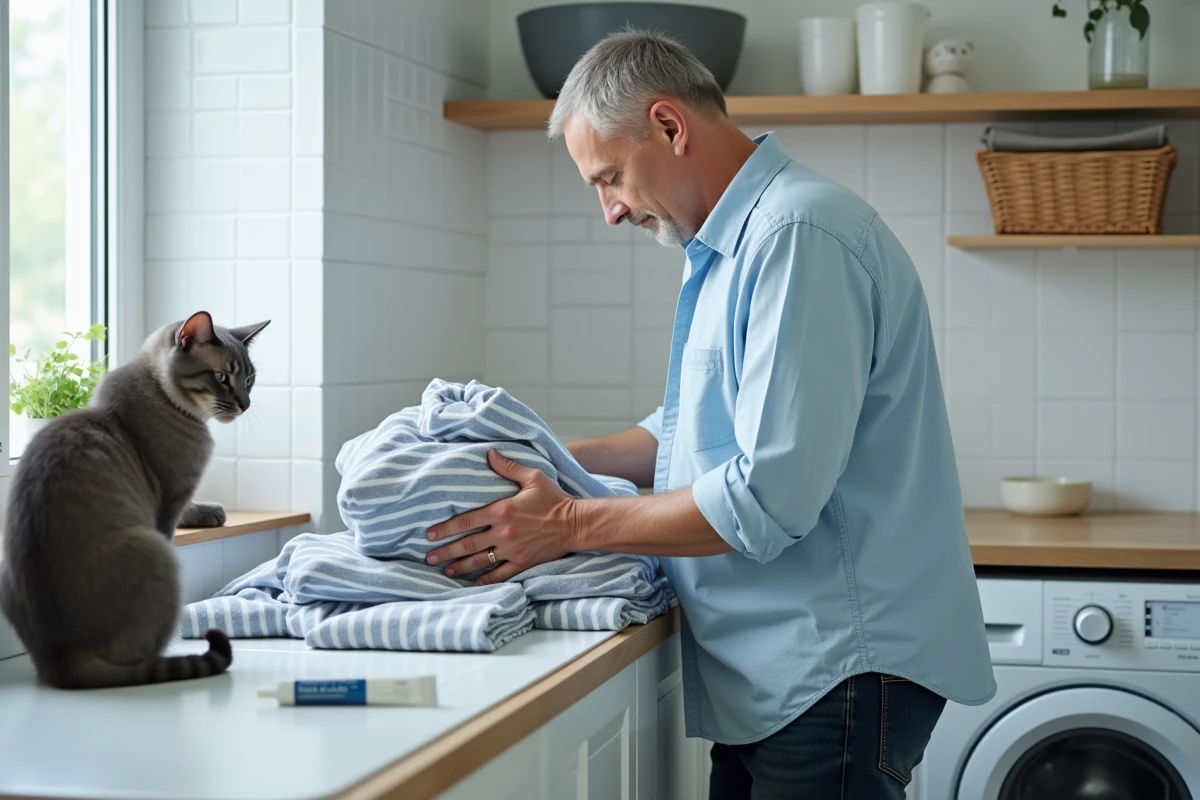
A low-temperature cycle is not sufficient to destroy intestinal parasite eggs. We recommend a wash at a minimum of 60 °C, followed by a high-temperature tumble dry. The prolonged heat from drying complements the washing action by eliminating any eggs that may have survived the machine cycle.
A often overlooked point: never shake dirty bedding before putting it in the machine. This action disperses microscopic eggs into the ambient air and contaminates other surfaces in the room, including the mattress, pillows, and floor.
- Remove the sheets by rolling them up, without shaking
- Place them directly into the drum of the machine
- Start a cycle at 60 °C with a standard spin
- Dry at high temperature or, if not possible, iron with a hot iron
What to clean beyond the sheets after deworming
Limiting cleaning to just the sheets addresses only part of the problem. The animal does not only contaminate the bed. Any textile in regular contact with it can harbor parasite eggs.
Blankets, throws, and sleeping basket
The dog or cat’s basket is the primary source of contamination. If the animal alternates between its basket and its owners’ bed, both sleeping areas must be washed simultaneously. A basket cleaned three days after the sheets allows time for the eggs to migrate back to the clean bedding.
The throws on the sofa, floor cushions, and long-pile rugs deserve the same treatment. In practice, we observe that owners think of the sheets but forget the throw in the living room where the dog spends its afternoons.
Hard surfaces and vacuuming
A vacuuming session in the bedroom and living areas complements the textile washing. Eggs that fall to the floor can be ingested by the animal during grooming or simply transported under its paws to the bed. Empty the vacuum bag or canister immediately afterward, preferably into an outdoor trash can.
Reinfestation between treatments: the trap of a spaced-out schedule
A dewormed animal is not continuously protected. The dewormer acts at the time of administration but provides no residual protection against new infestation. A dog that ingests parasite eggs the day after treatment begins an infectious cycle again.
The frequency of deworming depends on lifestyle. A dog that sleeps every night on its owner’s bed and goes out regularly in rural areas is at a higher risk than an indoor cat without outdoor access. The veterinarian adjusts the dosing schedule based on this profile.
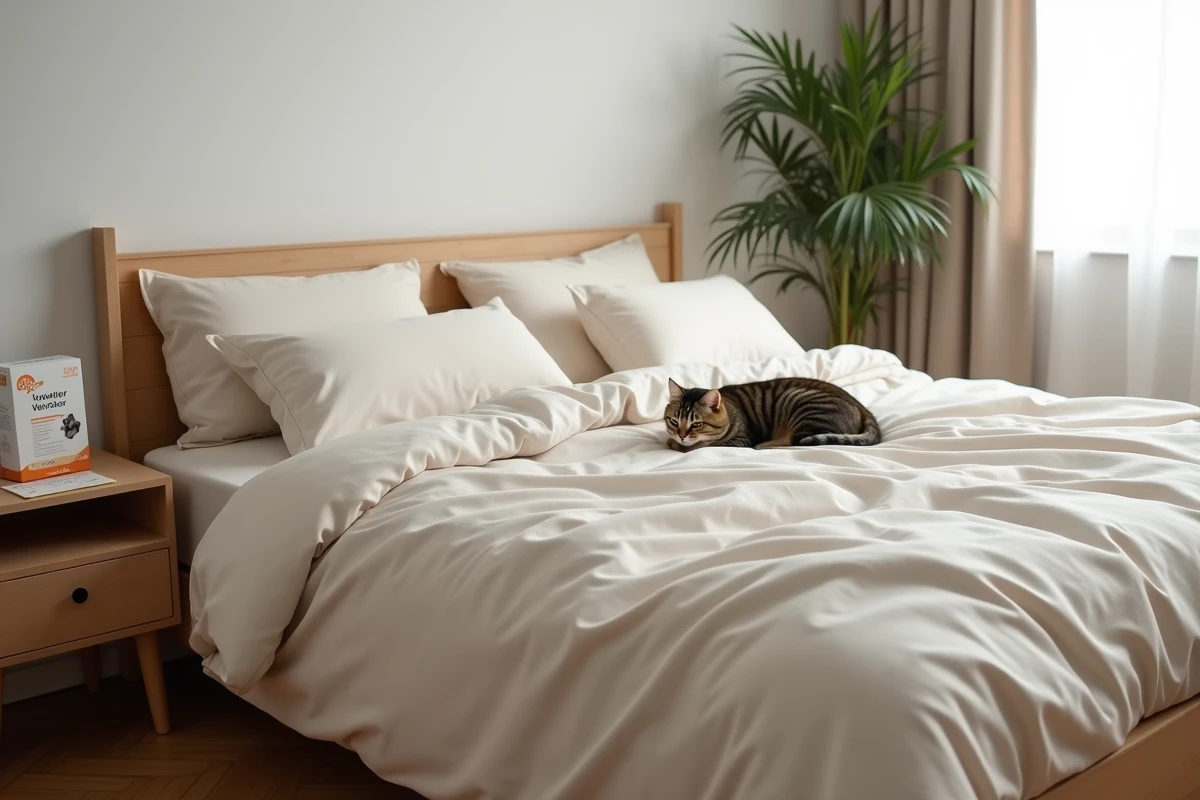
Between two dewormings, regular sheet changes remain the only mechanical barrier against the accumulation of eggs in the bedding. For an animal that shares the bed, weekly washing of the bedding significantly limits the risk of cross-contamination.
- Animal sleeping on the bed: wash the sheets every week under normal circumstances, immediately after each dose of dewormer
- Animal sleeping only in its basket: wash the basket after each dewormer, sheets according to the usual rhythm
- Household with young children: increase the washing frequency, as young children are more exposed to accidental ingestion of eggs
Changing sheets after deworming is not an isolated action. It is part of a comprehensive protocol that combines treating the animal, cleaning all textiles in contact, and maintaining surfaces. Separating these actions reduces the effectiveness of the dewormer and maintains a silent reinfestation cycle in the household.