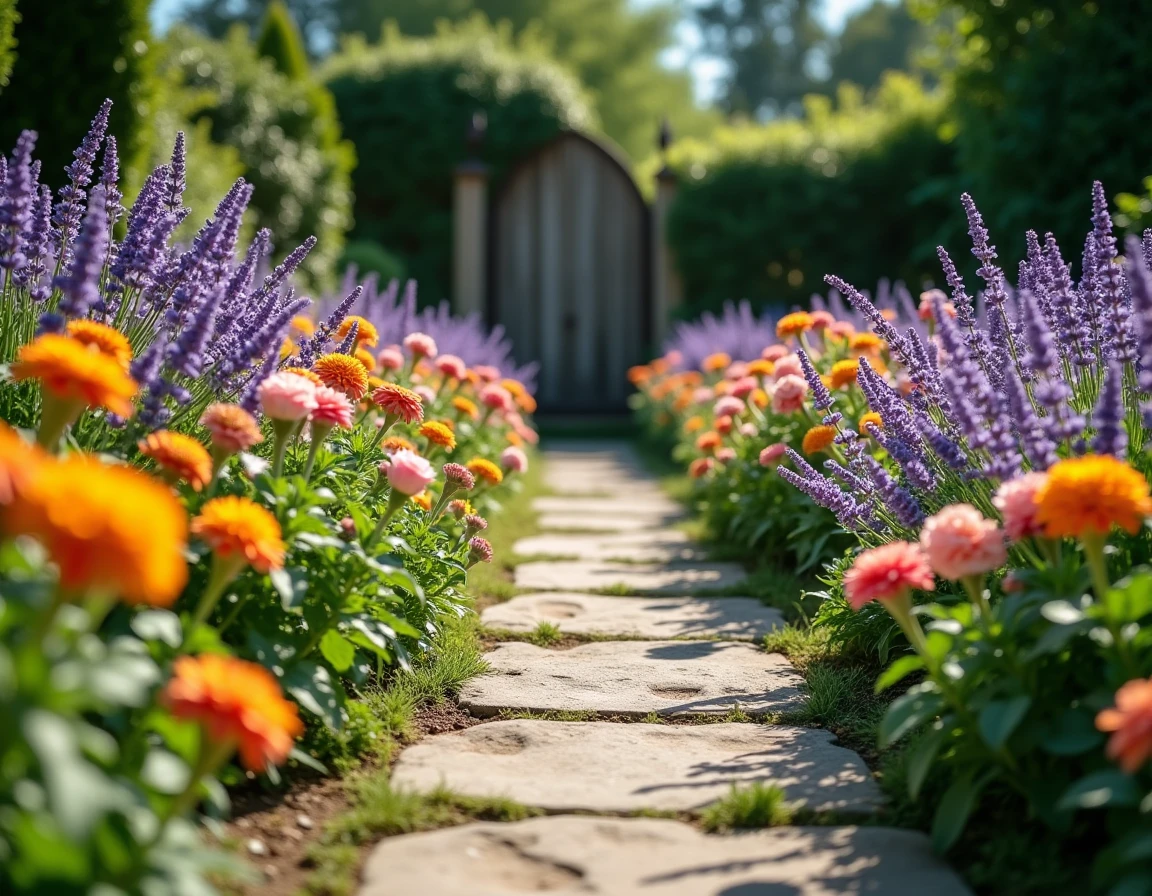
A garden that remains colorful in January as in August relies less on the number of varieties planted than on their complementarity. The choice of the most beautiful flowers for your garden depends on three concrete parameters: the nature of the soil, the exposure, and each plant’s ability to withstand prolonged heat episodes. Rather than listing dozens of species, this article focuses on the associations that truly work, season after season.
Long-lasting perennials: the backbone of a year-round flowering garden
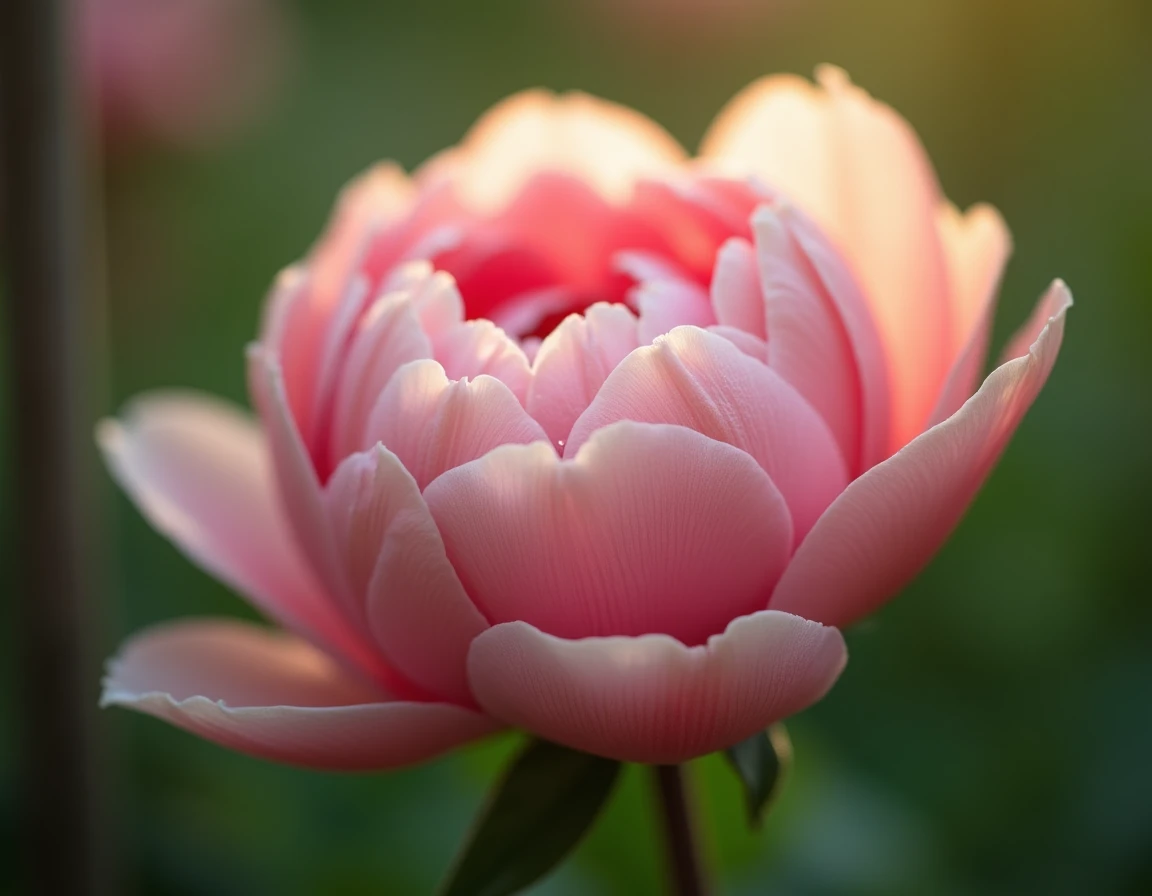
You may have noticed that some flower beds seem to improve over time, without replanting? Their secret often lies in a few structural perennials capable of staying in place for over twenty years. Species like herbaceous peonies, bear’s breeches, or Siberian irises form the permanent foundation of the garden.
These plants require almost nothing once established. They root deeply, resist frost, and bloom each year with more vigor. Their role is to provide the garden with a framework that seasonal flowers complement.
Peonies, for example, offer spectacular blooms in spring in shades ranging from white to deep red. Bear’s breeches take over in summer with their tall flower spikes, while Siberian irises bring shades of blue and purple from late spring. By combining these three perennials in the same bed, you already cover several months of color without any special maintenance effort.
To find varieties suited to your region and soil, the Une Fleur Un Jardin website offers a catalog that allows you to filter plants according to the desired exposure and flowering period.
Drought-resistant flowers: adapting your garden to long summers
Summer watering restrictions have become almost systematic in many French departments. Prefectural orders can prohibit all ornamental watering for several weeks. Planting water-hungry flowers exposes you to scorched beds by July.
The solution lies in naturally drought-tolerant perennials. Gaura, with its light stems covered in small pink or white flowers, can withstand very infrequent watering. Compact lavenders and sedums operate on the same principle: a deep root system that draws water from far below the surface.
Three criteria for choosing a heat-resistant flower
- A gray, silver, or fleshy foliage (like that of sedums) indicates a natural adaptation to dry soils and sunny exposures
- A Mediterranean or steppe origin, a sign that the plant has evolved with long, hot summers without regular rainfall
- A taproot or spreading root system, capable of seeking residual moisture deep down rather than relying on surface watering
Rudbeckias deserve a special mention. These perennials with intense yellow blooms last all summer and a good part of autumn. They tolerate both full sun and occasionally dry soils. When combined with ornamental grasses, they create very natural beds that require little intervention.
Autumn and winter flowering: the months that gardeners neglect
October to March represents almost half of the year. During these months, a well-planted garden can offer as much visual interest as in spring, provided you choose species suited to this window.
The Naples cyclamen blooms in autumn, sometimes until November, with bright pink hues that stand out against the fallen leaves. It thrives in the shade, under deciduous trees, where few plants are willing to grow. The cyclamen is one of the few reliable flowers for shaded areas in autumn.
In winter, the hellebore (Christmas rose) takes over. Its white, green, or purple flowers appear as early as December in regions with mild winters. It withstands cold, partial shade, and heavy soils. Two or three plants are enough to enliven a bed when everything seems dormant.
Combining early bulbs and late perennials
Snowdrops and crocuses signal the end of winter as early as February. Planted in dense groups under shrubs, they create splashes of color even before the spring perennials emerge from dormancy. The trick is to install them at the foot of peonies or bear’s breeches: when the bulbs fade, the foliage of the perennials takes over and masks their disappearance.
This plant relay technique ensures a bed without visible flowering gaps from February to November.
Soil and exposure: the two choices that matter before variety
Why does the same variety of rose thrive at a neighbor’s and wither in your garden? The answer rarely lies in watering or fertilization. The soil and exposure determine the success of a planting far more than the variety choice.
Clay soil retains water and is suitable for astilbes, hostas, and swamp irises. Sandy soil drains quickly and better accommodates lavenders, gauras, and ornamental sages. Planting lavender in heavy, wet soil condemns it to root rot within a few seasons.
Exposure works in the same way:
- Full sun (more than six hours a day): rudbeckias, echinaceas, ornamental sages, gauras
- Partial shade (sun in the morning, shade in the afternoon): perennial geraniums, Japanese anemones, heucheras
- Dense shade (under tree cover): cyclamens, hellebores, hostas, ferns associated with woodland flowers
Before buying any plant, dig a hole thirty centimeters deep and observe the soil. Sticky and compact, it’s clay. Granular and light, it’s sand. Brown and crumbly, it’s a humiferous soil that accepts almost everything.
A few structural perennials chosen according to your soil and climate, complemented by bulbs and annuals to fill the gaps, are enough to maintain color in a bed from January to December. Three structural perennials and a handful of relay plants are enough to cover twelve months without excessive watering or annual replanting.