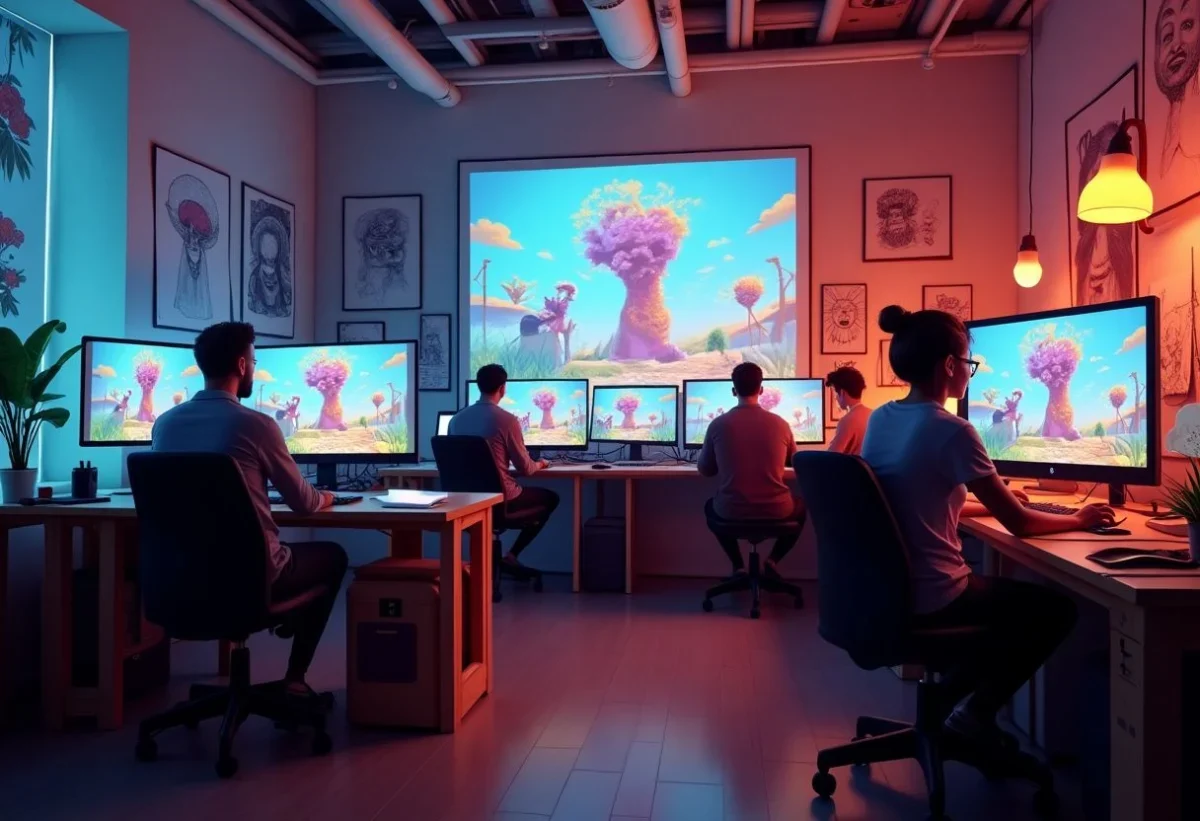
In a world where animation is taking an increasingly prominent place in various fields such as cinema, advertising, and even education, the desire to transform a passion for drawing and storytelling into a thriving career continues to grow. Following a animation preparatory course allows one to immerse themselves in this digital universe while acquiring the essential skills needed to succeed in this competitive industry. These programs are designed to provide a solid foundation, covering a variety of aspects ranging from traditional animation techniques to the most advanced digital technologies.
What is an animation preparatory course?
Understanding what an animation preparatory course encompasses can be decisive for those aspiring to enter the world of professional animation. This preliminary training is often the first step for many budding artists.
- Main objective: An animation preparatory course aims to establish a solid foundation in terms of artistic and technical skills.
- Program content: Courses generally include drawing, color theory, visual storytelling, and an introduction to animation software.
- Personal development: Students learn to develop their own style and refine their skills in visual communication.
Key skills developed
At the heart of an animation preparatory course lies the acquisition of diverse skills that enable future animators to adapt to a constantly evolving market.
Students learn to master software such as Adobe Animate, Blender, and Maya, which are essential in the industry. Developing a deep understanding of perspective, proportion, and rhythm is also crucial for bringing stories and characters to life.
By focusing on practical projects, students also develop time management and teamwork skills, which are essential for successfully completing collaborative projects in the professional world of animation.
Career opportunities
Once the animation preparatory course is completed, several career paths open up for aspiring animators. These opportunities can vary depending on the interests and specializations chosen during the training.
Among the most common career paths are:
- 2D/3D Animator: Working on films, television series, or video games.
- Storyboard Artist: Designing the visual storyline of a project before its realization.
- Character Designer: Creating and developing unique and memorable characters.
- Animator for Advertising: Developing captivating animations for marketing campaigns.
The Impact of Technology on Animation
With the rapid evolution of technology, animation preparatory programs must continuously adapt to remain relevant. This constant adaptation is essential to prepare students for the modern challenges of the industry.
Technologies such as augmented reality (AR) and virtual reality (VR) are opening new horizons for animation, transforming the way stories are told and experienced. Students must not only master traditional animation techniques but also understand and integrate these new technologies into their work.
The use of artificial intelligence is beginning to influence the way animations are created, allowing for the automation of certain tasks while providing more time for creativity and innovation.
Learning to navigate this constantly evolving technological environment is a valuable asset for any animator looking to stand out in this dynamic field.