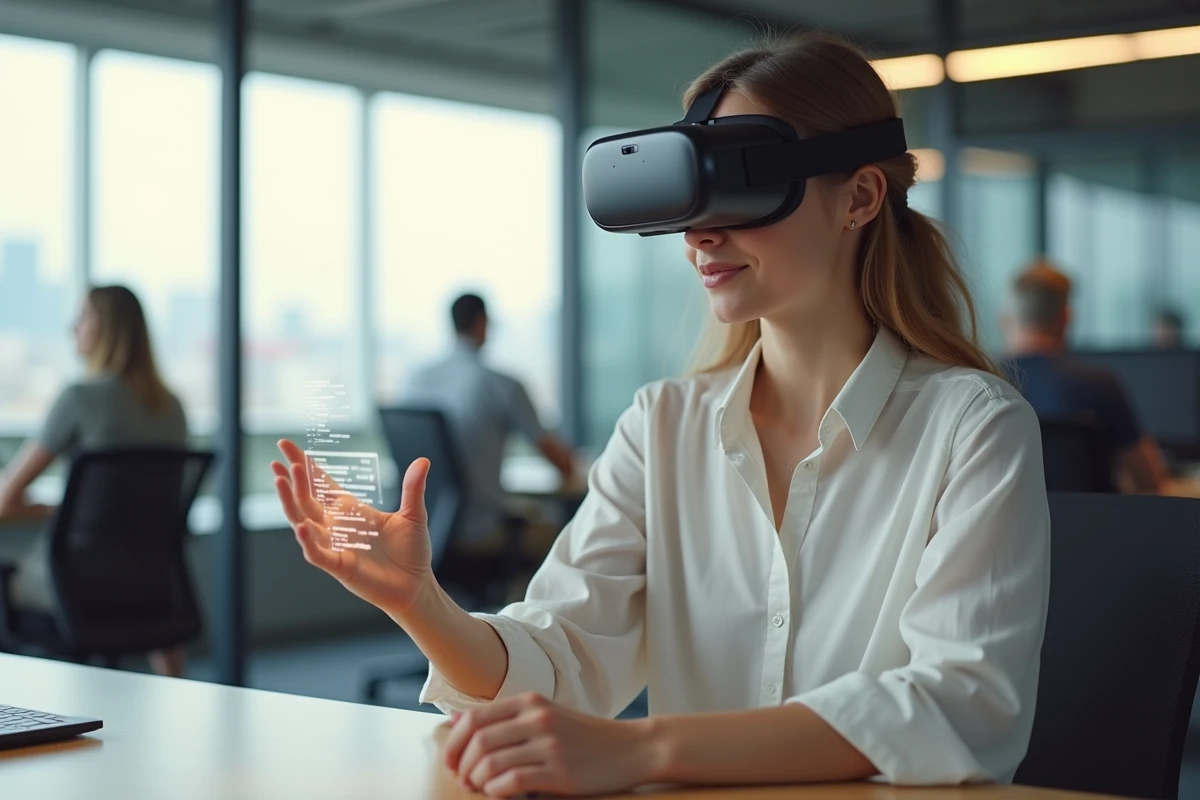
Which technologies deployed in 2024 are truly changing everyday usage, and which remain at the stage of marketing promise? The technological innovations announced each year number in the dozens, but their actual adoption by the general public or businesses follows a very different pace from that of press releases. Distinguishing concrete deployment from mere announcements allows for a better assessment of what is genuinely changing.
Gap between announcement and deployment: the missing lens in tech reviews 2024
End-of-year technology reviews share a blind spot: they list innovations without measuring their actual adoption. MIT publishes its annual selection of promising technologies, and events like CES in Las Vegas unveil spectacular prototypes. These lists fuel enthusiasm, but they do not document the journey from demonstration to everyday use.
The European regulation on artificial intelligence (AI Act), whose gradual implementation began in 2024, illustrates this gap. The European regulation reorients the priorities of tech publishers even before some products reach the market. Companies must adapt their models to new constraints, which alters the speed and direction of innovation.
To gain clarity, you can access Blognet News tech and follow the news of real deployments rather than just announcements.
| Technology | Media promise level | Public deployment in 2024 |
|---|---|---|
| Generative AI (text, image) | Very high | Wide integration into office and creative tools |
| Quantum computing | High | Limited to laboratories and a few industrial cases |
| Transparent screens | High (CES 2024) | Almost none outside showcases and prototypes |
| Health connected devices (like BeamO) | Moderate | Beginning of commercialization, adoption still limited |
| AI domestic robots | High | Marginal, use confined to demonstration |
This table highlights a constant: discreet innovations dominate actual usage while the most publicized technologies often remain at the experimental stage.
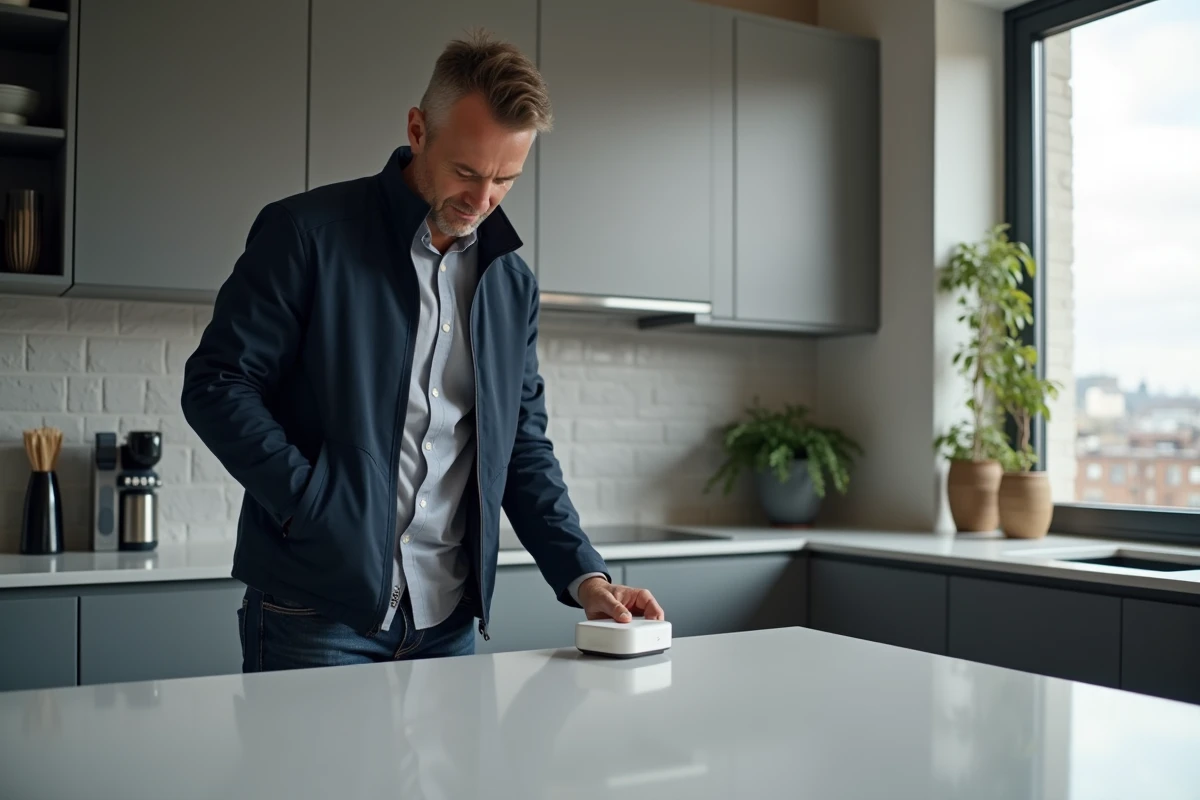
Generative artificial intelligence: massive adoption, discreet failures
Generative AI has been in the spotlight since 2023. In 2024, its integration into professional tools has accelerated. Text, image, and code generation models are now integrated into the software suites of major publishers. Companies use it for writing, data analysis, and automating repetitive tasks.
This massive adoption masks a less documented phenomenon. A significant portion of AI projects in companies do not reach production. The causes are recurrent: insufficient or poorly structured data, expectations misaligned with the actual capabilities of the models, and a lack of internal skills to maintain systems after initial deployment.
The gap between displayed enthusiasm and operational results creates a gray area. Management invests, technical teams implement, but the return on investment remains difficult to measure for the majority of non-critical use cases.
What works concretely
- Assistance with writing and synthesizing long documents, where time savings are measurable and immediate for everyday users
- Image generation for rapid prototyping in design, advertising, and visual communication, reducing creative production timelines
- Automated analysis of large datasets in financial services and logistics, provided that source data is properly structured
In contrast, advanced uses (autonomous agents, complex multi-step reasoning) remain largely experimental and have not yet transformed the daily lives of most users.
Hardware innovations 2024: screens, health sensors, and market concentration
CES 2024 showcased transparent screens, AI-driven domestic robots, and connected health devices like BeamO, designed to perform at-home health assessments. These products capture media attention, but their commercial trajectory diverges significantly.
Transparent screens, presented by several manufacturers, lack a public distribution channel. Their use is limited to commercial or museum installations. The transparent screen remains a technological showcase, not a mass product.
Connected health sensors are following a different path. The market for connected health devices is progressing because it meets an identifiable demand: remote medical monitoring, amplified since the pandemic. Adoption remains gradual, hindered by issues of measurement reliability and personal data protection.
Concentration of players and impact on technological diversity
The acquisitions made by major tech platforms since 2023 have accelerated market concentration. This dynamic has a direct consequence on the nature of innovations offered to the public: new features mostly arrive through software updates, not through the emergence of new players or new hardware formats.
The most noticeable improvements in daily life in 2024 stem from software optimizations (battery life, interface fluidity, quality of automatic suggestions) rather than hardware breakthroughs. This phenomenon aligns with a mature market where incremental innovation generates more usage value than spectacular prototypes.

European AI Act and reorientation of technological priorities
The gradual implementation of the AI Act in 2024 has introduced a new variable into the innovation cycle. European publishers must classify their AI systems by risk level and document their processes before commercialization.
This regulatory constraint does not uniformly hinder innovation. It reorients investments toward moderate-risk uses (assistance, recommendation, optimization) at the expense of high-risk autonomous systems. The European regulatory framework shapes the type of AI that reaches the market.
For companies deploying these technologies, compliance becomes a full-time job. Legal and technical teams collaborate early in the development process, which lengthens time-to-market cycles but reduces post-launch withdrawal risks.
The technological innovations of 2024 that truly transform daily life share a common trait: they integrate into existing tools rather than creating new ones. Generative AI modifies office work, health sensors enrich smartphones, and software optimizations extend device lifespans. The spectacular grabs attention, while the functional establishes itself sustainably.