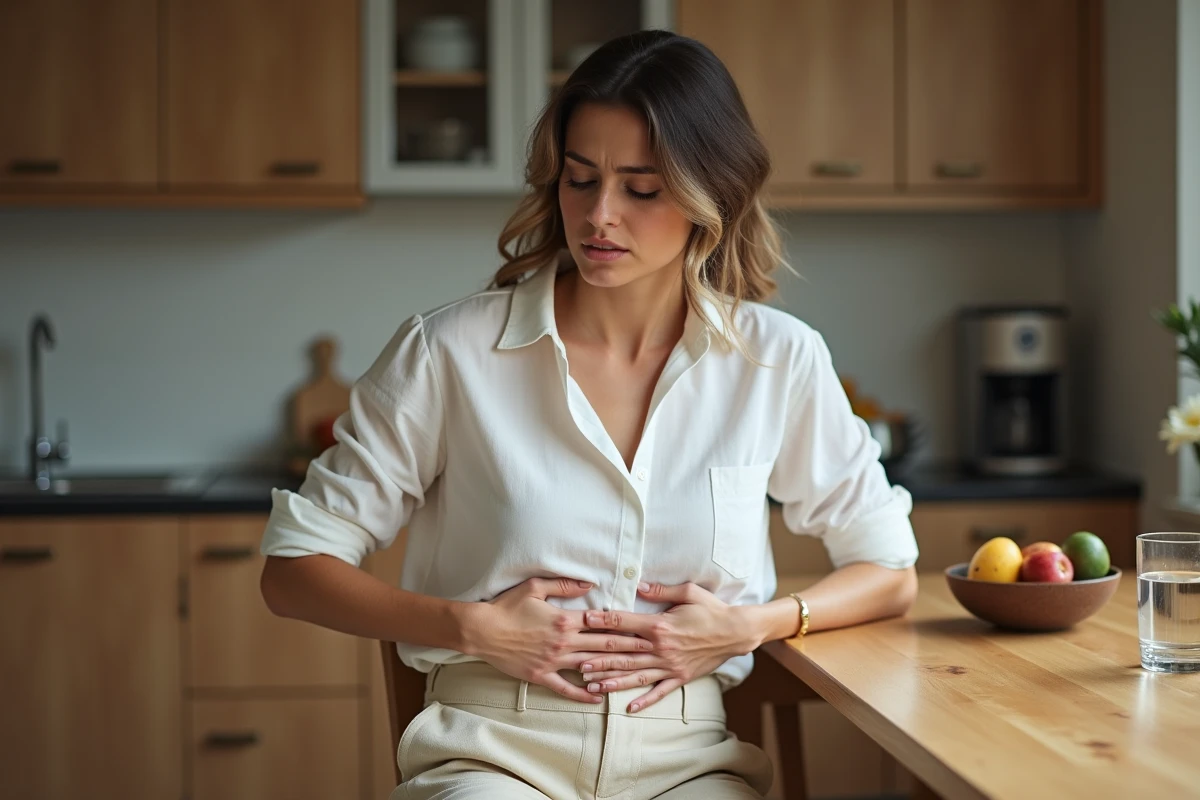
A bloated belly in women is not always just a matter of digestion or diet. Several distinct mechanisms can produce the same visible symptom, and confusing them often delays proper management. Understanding what distinguishes gas-related distension from a muscular coordination disorder or a gynecological cause allows for targeting the right response.
Abdominal-diaphragmatic dyssynergy: a bloated belly without excess gas
Most articles on bloating point towards diet or stress. However, a notable proportion of women with chronic abdominal distension do not have measurable excess gas.
Dr. Pasricha, a gastroenterologist cited by the New York Times in 2023 and referenced by Marie Claire France in 2024, describes a specific mechanism: the diaphragm pushes down while the abdominal wall relaxes. This lack of coordination between the diaphragm and abdominal muscles creates visible distension, even without abnormal intestinal fermentation.
To delve deeper into the causes of a bloated abdomen in women, this distinction between excess gas and mechanical disorder radically changes the therapeutic approach. Elimination diets do not provide relief in this case. In contrast, techniques of respiratory rehabilitation and biofeedback show results in these patients by restoring coordination between the diaphragm and abdominal belt.

Bloating in women: a comparison of digestive and hormonal causes
Two main families of causes produce abdominal swelling in women. The table below contrasts their characteristics to facilitate orientation.
| Criteria | Digestive Causes | Hormonal and Gynecological Causes |
|---|---|---|
| Timing of swelling | After meals, subsides when fasting | Cyclical (premenstrual phase) or permanent |
| Associated symptoms | Flatulence, abdominal pain, transit disorders | Pelvic pain, water retention, cyclical pain |
| Aggravating factors | Fermentable foods (FODMAPs), fast meals, stress | Fluctuations in estrogen and progesterone, endometriosis |
| Relief options | Supervised low FODMAP diet, transit management | Gynecological follow-up, endometriosis screening |
| Typical duration | Intermittent, meal-related | Several consecutive days, sometimes chronic |
A swelling that consistently appears after meals and then subsides points to a functional digestive disorder, such as irritable bowel syndrome or SIBO. Conversely, a permanent bloated belly associated with cyclical pain warrants a gynecological assessment.
The trap of underdiagnosed SIBO
Small intestinal bacterial overgrowth (SIBO) is a common cause of chronic bloating in women of childbearing age. The symptoms easily overlap with those of irritable bowel syndrome: gas, distension, discomfort after meals.
Recent studies show that a low FODMAP diet supervised by a professional, with or without targeted probiotics, can significantly reduce symptoms. Self-diagnosis and unsupervised elimination diets risk worsening the situation by creating deficiencies.
Endometriosis and bloated belly: a link now recognized by the HAS
Since 2023, the Haute Autorité de Santé (HAS) emphasizes the systematic screening for endometriosis in women presenting with bloating associated with cyclical pain. The Collège National des Gynécologues et Obstétriciens Français (CNGOF) also integrates these recommendations into its 2022-2023 updates.
The so-called “pseudo-functional” digestive symptoms (bloating, constipation, abdominal pain) are now recognized as a common mode of revealing endometriosis. For years, these women were diagnosed with functional colopathy or stress, delaying the management of the underlying disease.
Warning signs not to trivialize
- Hard bloated belly that worsens before or during menstruation, with no clear link to diet
- Deep pelvic pain accompanying abdominal swelling, especially in the second half of the cycle
- Transit disorders (alternating constipation-diarrhea) appearing or intensifying during menstruation
- Persistent swelling despite well-conducted dietary modifications over several weeks
The presence of two or more of these signals in a woman of childbearing age justifies a specialized consultation rather than a simple dietary adjustment.

Constipation and intestinal fermentation: adapting transit without extreme diets
Constipation remains one of the most direct causes of a bloated belly in women. A slowed transit increases the fermentation time of food in the colon, which amplifies gas production and distension.
Cooking vegetables rather than consuming them raw reduces their fermentable potential while preserving fiber intake. This approach, highlighted by nutrition specialists, avoids radical elimination diets that ultimately deplete the microbiota.
- Favor soluble fibers (cooked carrots, zucchini, sweet potatoes) that ferment less than raw insoluble fibers
- Split meals to limit the volume of gas produced in a single digestion
- Maintain regular hydration with low-mineral water, which promotes transit without overloading digestion
Stress also plays a direct role in intestinal motility. The gut-brain axis modulates transit speed: chronic anxiety can slow peristalsis and maintain a vicious cycle of bloating-discomfort-stress.
The reflex to multiply dietary supplements (activated charcoal, probiotics, digestive enzymes) without identifying the cause of bloating rarely produces a lasting effect. A bloated belly that persists beyond a few weeks despite reasonable dietary adjustments deserves medical advice, if only to rule out an organic or gynecological cause that diet alone will not correct.